

Introduction
When people ask, “How would you explain the rise of Napoleon?”, the answer is not simple. Napoleon Bonaparte’s rise from a young soldier in Corsica to Emperor of France was shaped by political chaos, personal ambition, military genius, and the weaknesses of his opponents. His story is one of the most fascinating examples of how individual talent and historical conditions can combine to change the world.
Early Life of Napoleon
Napoleon Bonaparte was born in 1769 in Corsica, just after the island was taken over by France. He came from a modest but noble family. From a young age, he showed brilliance in mathematics, strategy, and leadership. His education at French military schools prepared him for a career in the army.
France Before Napoleon: A Nation in Crisis
To understand the rise of Napoleon, you must first look at France’s situation. After the French Revolution of 1789, the monarchy was gone, but the country was unstable. There were economic problems, political rivalries, and foreign enemies surrounding France. People wanted strong leadership, and Napoleon was ready to provide it.
Military Success: The Foundation of His Power

Napoleon first gained fame during the Italian Campaign (1796–1797), where his strategies and bold moves brought victory against Austria. Later, even though his Egyptian campaign failed strategically, it boosted his image as a daring leader. These successes made him popular with the army and the French people.
Political Weakness in France
By the late 1790s, the French government, known as the Directory, was weak and unpopular. Corruption, inefficiency, and constant wars made people lose faith in democracy. This situation created the perfect opportunity for a strong figure like Napoleon to take charge.
The Coup of 18 Brumaire (1799)
One of the most important moments in explaining the rise of Napoleon is the coup of 18 Brumaire. With the support of the army and key politicians, Napoleon overthrew the Directory in 1799 and established the Consulate. He became First Consul, which gave him near-dictatorial power.
Propaganda and Popular Support
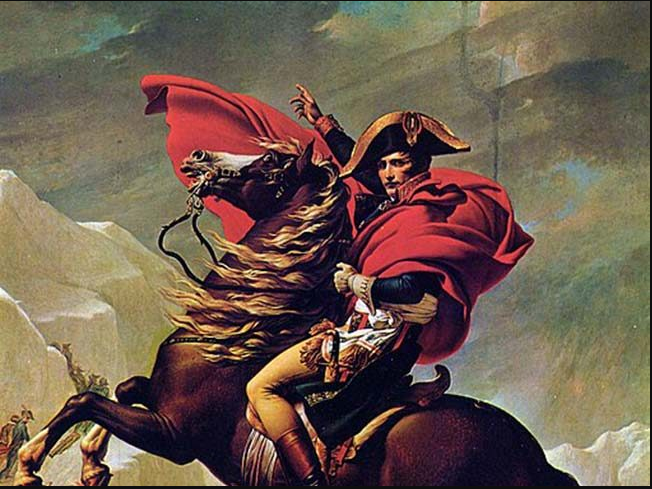
Napoleon was not just a military leader; he was a master of propaganda. He carefully shaped his image as a man of the people, a defender of the revolution, and a national hero. This helped him win loyalty from both soldiers and civilians.
The Role of the Army
The French army was central to Napoleon’s rise. Soldiers respected his leadership because he shared their hardships and rewarded their loyalty. His ability to inspire his troops gave him a powerful base of support that few politicians could challenge.
Reforms That Strengthened His Rule
As First Consul, Napoleon introduced reforms that stabilized France. He reorganized the legal system with the Napoleonic Code, improved education, modernized the economy, and made peace with the Catholic Church through the Concordat of 1801. These reforms gained him respect and legitimacy.
From Consul to Emperor
In 1804, Napoleon crowned himself Emperor of the French in a grand ceremony in Paris. This step symbolized the peak of his rise. By taking the crown himself, he showed that his authority did not come from the Pope or any monarch—it came from his own power and the will of the people.
Why Did People Support Napoleon?
- Stability: After years of chaos, he provided order.
- Nationalism: He inspired pride in being French.
- Opportunity: He rewarded talent, not just noble birth.
- Charisma: His speeches and presence motivated people.
International Context and His Enemies’ Mistakes

Napoleon also rose because his enemies underestimated him. Britain, Austria, and Prussia tried to defeat France but often disagreed among themselves. This gave Napoleon the chance to outmaneuver them and expand his influence across Europe.
Limitations of His Rise
Although his rise was spectacular, it was not permanent. His ambition led to costly wars, especially the invasion of Russia in 1812, which began his downfall. Still, understanding the rise of Napoleon is about seeing how he combined personal skills with the historical moment.
Lessons from Napoleon’s Rise
Napoleon’s story shows how:
- Leadership can turn crisis into opportunity.
- Military success creates political power.
- Public image and propaganda are as important as real achievements.
- Reforms and order can win popular support even after revolution.
FAQs
1. What factors explain the rise of Napoleon?
His military talent, political instability in France, weak governments, and his charisma all combined to bring him to power.
2. Did the French Revolution help Napoleon rise?
Yes, the revolution destroyed the old monarchy and created space for ambitious leaders like Napoleon.
3. Was Napoleon’s rise only due to his military skills?
No, he also used propaganda, reforms, and political strategy to secure power.
4. Why did people accept Napoleon as Emperor?
Because he brought stability, pride, and progress after years of chaos.
5. How fast was Napoleon’s rise?
Very fast—within just 10 years he went from being an officer to Emperor of France.
Conclusion
So, how would you explain the rise of Napoleon? It was a mix of personal ambition, extraordinary military skill, and the unique historical conditions of post-revolutionary France. Without the chaos of the French Revolution, Napoleon might have remained a talented general. But with the right timing, he transformed himself into one of history’s most famous leaders. His rise reminds us that history is shaped both by individuals and the times they live in.
